
 CodeSight Media
Seventy-four years ago, on February 7, 1951, an extraordinary display of courage and leadership unfolded on a Korean battlefield. Captain Lewis Millett of the United States Army, at the young age of 30, led his men in what would become one of the most legendary bayonet charges in modern military history. This gripping tale of bravery not only showcases the indomitable human spirit but also offers profound lessons in leadership and determination.
The Prelude to Heroism
During the Korean War, Captain Millett served as the commanding officer of Company E, 27th Infantry Regiment, 25th Infantry Division. The stakes were high as his unit advanced strategically near Soam-ni, Korea. A captured Chinese document had revealed the enemy’s perception: American soldiers feared cold steel and close-quarters combat. Captain Millett, however, was determined to prove them wrong.
The Call to Arms
As the day unfolded, Captain Millett made a bold decision that would etch his name in history. He ordered his men to fix bayonets, preparing for a direct assault on a heavily fortified hill controlled by a sizable enemy force. With his heart set on victory, he led his men up the slope, undeterred by the barrage of automatic weapons and anti-tank fire.
The Charge of a Lifetime
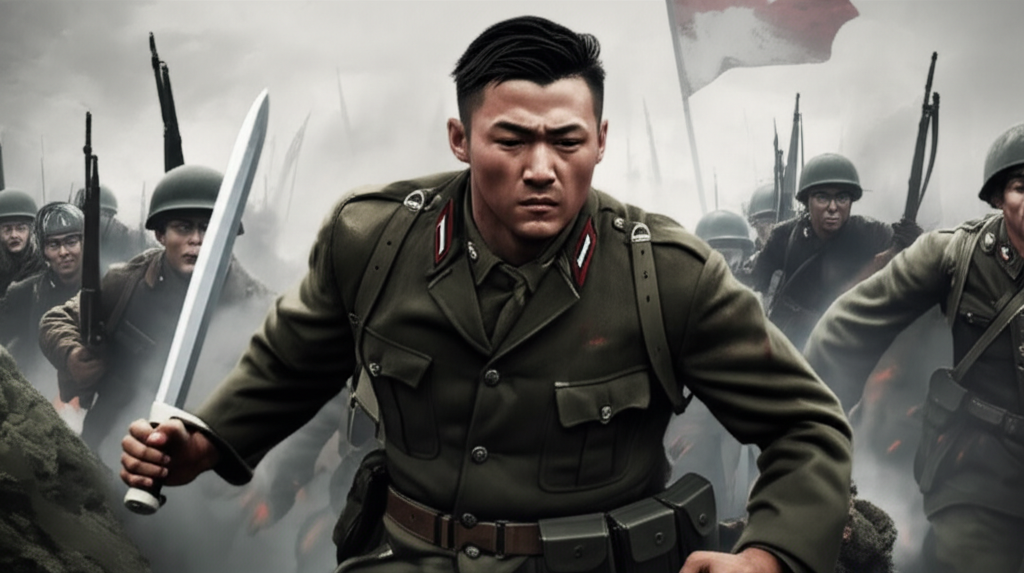
As Company E advanced, the 1st Platoon found themselves pinned down by relentless enemy fire. Captain Millett, embodying the very essence of leadership, refused to wait for artillery support. Instead, he charged ahead, rallying his men to follow him across open, fire-swept ground. With his bayonet fixed to his rifle, he led the charge into the heart of the enemy.
Defying the Odds
Captain Millett’s bravery was nothing short of legendary. He personally attacked an enemy machine-gun nest, taking out the crew and silencing the weapon. His relentless spirit was infectious as he threw grenades into enemy foxholes, shouting words of encouragement to keep his troops moving forward. Despite the intense fire, he refused to seek cover, his sole focus being the success of the mission.
Even when an enemy grenade exploded near him, peppering his legs with shrapnel, Captain Millett ignored the pain and continued his uphill sprint. The combat morphed into chaotic, hand-to-hand fighting as the Americans reached the hill’s crest. Captain Millett’s aggression and refusal to yield struck terror into the defending troops, who began to break and flee.
The Aftermath and Legacy
Captain Millett’s leadership led to the capture of the objective and the complete rout of the enemy force. Of the roughly 50 enemy soldiers killed, nearly 20 fell to bayonets. This remarkable feat did not go unnoticed. He was recommended for the Medal of Honor, and on July 5, 1951, President Harry S. Truman presented him with the award during a White House ceremony.
Captain Millett’s legacy continued beyond the Korean War. He helped found the Recondo school for the 101st Airborne Division and retired as a Colonel in 1973. His life, marked by courage and dedication, ended on November 14, 2009, when he passed away from congestive heart failure at the age of 88.
Lessons in Leadership and Bravery
Captain Millett’s story serves as a powerful reminder of the impact of bold leadership and the strength of the human spirit. His actions teach us that true courage lies in facing fears head-on and leading by example. In our own lives, whether in personal or professional arenas, we can draw inspiration from his unwavering commitment to his values and mission.
As you reflect on this tale of valor, consider the following question: What bold step can you take today to lead with courage and inspire those around you?
Let Captain Millett’s story be a beacon of inspiration, motivating you to rise to the challenges you face with determination and bravery.


 Jay Writer



 CodeSight Media