
 CodeSight Media
Imagine a time when the very idea of a woman inventing something was met with skepticism, if not outright disbelief. Now, imagine a woman who not only defied these societal norms but also changed the way we approach everyday tasks in the kitchen. Meet Josephine Cochrane, the brilliant mind behind the invention of the mechanical dishwasher, whose story is one of resilience, ingenuity, and groundbreaking innovation. This post delves into her journey, offering insights into her challenges and triumphs, while drawing lessons that can inspire anyone aiming to break barriers and innovate in their own life.
The Catalyst: A Problem in the Dining Room
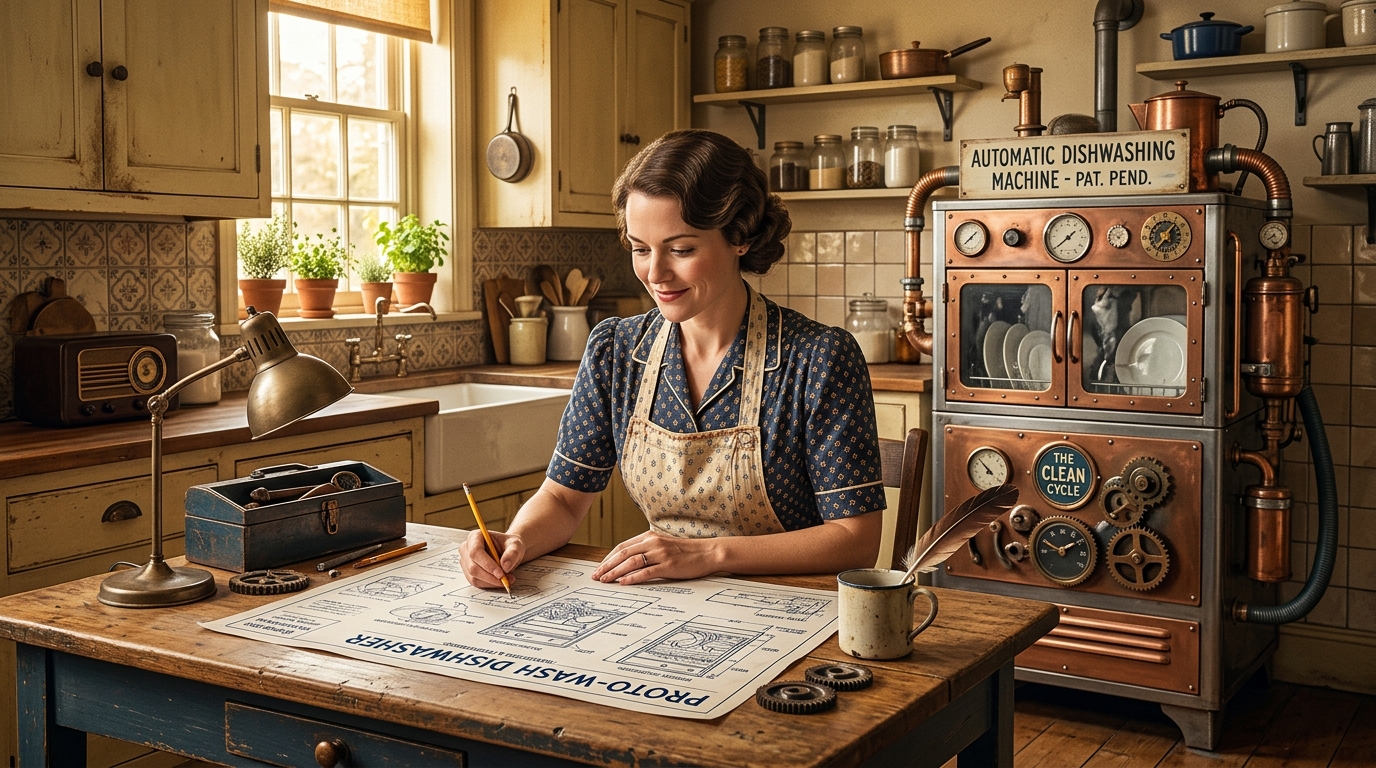
In the 1880s, the bustling town of Shelbyville, Illinois, was a place where societal norms dictated a woman’s role. Josephine Cochrane, however, was not one to conform. One day, she watched in frustration as her family’s precious heirloom china was chipped and damaged by her servants. “If nobody else is going to invent a dishwasher, I’ll do it myself,” she resolved. These words marked the beginning of her journey into uncharted territory.
Identifying the Problem
Josephine’s problem was simple yet profound: the manual washing of dishes was not only time-consuming but also prone to accidents. The need for a solution was clear, but the path to finding one was fraught with societal barriers and personal challenges. She was a widow, left with debts after her husband William’s death in 1883, yet she saw this as an opportunity rather than a setback.
The Spark of Innovation
Without any formal engineering training, Josephine began experimenting in the shed behind her home. Her process was one of trial and error, marked by meticulous measurements of plates and calculations of water pressure. She designed wire racks and built wooden wheels, striving to create a machine that could wash dishes more efficiently than human hands.
Turning Vision into Reality: The Birth of the Dishwasher
By 1886, Josephine’s hard work paid off with the creation of the first practical mechanical dishwasher. This invention used jets of hot, soapy water to clean dishes, a revolutionary concept at the time. Her invention was not just a machine; it was a testament to her determination to solve a common problem and defy societal expectations.
Building a Business Empire
Josephine’s journey did not end with the invention. She ventured into the business world, a bold move for a woman in her era. She patented her design, produced the machines by hand, and marketed them to hotels and restaurants. Her hands-on approach to demonstrations and deal-making showed her business acumen and determination to succeed.
Recognition and Expansion
The turning point came in 1893 at the Chicago World’s Fair, where her dishwasher won the highest award for mechanical construction, durability, and practical application. This recognition led to a surge in orders from various establishments, including the Illinois State Penitentiary. By the early 1900s, her company was thriving, and her success paved the way for what would later become the KitchenAid brand.
Lessons from Josephine Cochrane’s Legacy
Josephine Cochrane’s story is an inspiring example of how everyday frustrations can lead to groundbreaking innovations. Her journey offers several lessons for anyone facing challenges in their personal or professional life.
- Challenge Societal Norms: Josephine refused to let societal expectations define her capabilities. Her story encourages us to question the status quo and pursue our passions, regardless of societal constraints.
- Perseverance Pays Off: Her journey was marked by failures and setbacks, yet she persisted. This highlights the importance of resilience and determination in achieving success.
- Innovation from Necessity: Josephine identified a problem in her own life and set out to solve it. This reminds us that innovation often comes from addressing our own needs and frustrations.
- Business Acumen: She not only invented but also successfully marketed her creation, demonstrating the importance of understanding both the technical and business sides of innovation.
Conclusion: The Legacy Lives On
Every time a dishwasher hums in a modern kitchen, it echoes the legacy of Josephine Cochrane. Her story is a powerful reminder that no barrier is too great when met with determination and creativity. As you reflect on her journey, consider the barriers you can break and the innovations you can bring to life in your own world. What problem will you choose to solve, and how will you challenge the norms to make it happen?
In the spirit of Josephine Cochrane, let us all strive to look beyond limitations and embrace the potential within us to create change, no matter how daunting the task may seem.


 Jay Writer



 CodeSight Media